
by Viki Kidd
Photo credit also to Viki
Wool sheep? Hair sheep? Mixed breeds? What is the best kind or breed of sheep for training sheepdogs?
This is a question that many a handler/trainer have mused over and debated with other handlers for years.
U.S. sheepdog handler and trainer, Mike Neary, recently retired from Purdue University, even wrote a book on it! ‘Sheep for Sheepdogs: A Sheepdog Handler's Practical Guide to Sheep’
My own flock of sheep are North Country Cheviots (NCC) and Barbados Black Belly (BBB) cross-breds with a dash of Rideau added in the last 4 years or so. I have been breeding this combination back and forth for more than 25 years. Every couple of years I buy in a purebred NCC and/or BBB ram to breed back to my ewes. Occasionally I also keep one of my own ram lambs to use. I have kept spreadsheets over the years to keep track of the percentage of each breed in the lambs produced to be able to get to the point that the majority of the ewes are about 60% NCC/40% BBB.
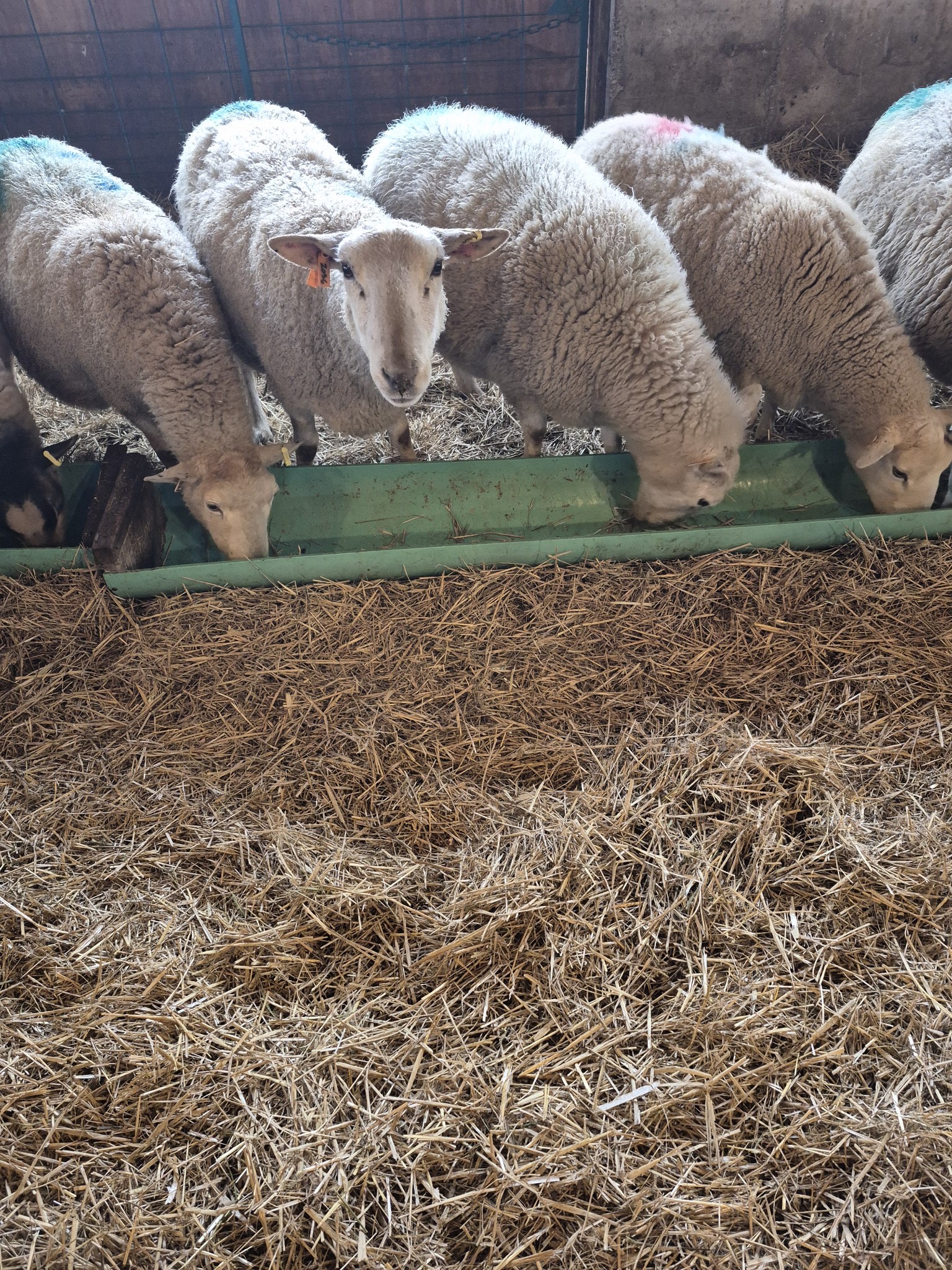
Above are examples of the consistency of the 60 -75% NCCs
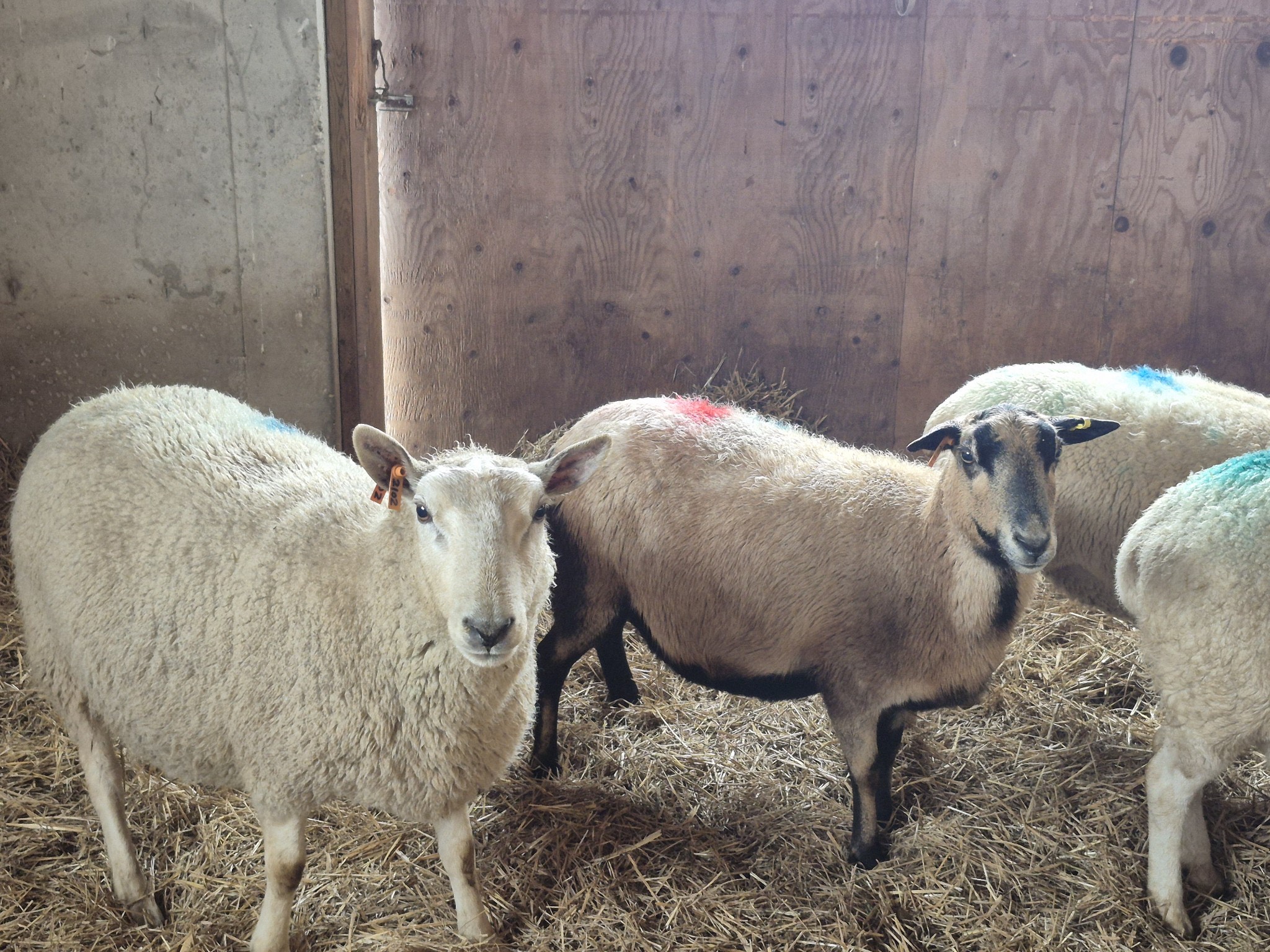
Above are examples of 60/40 Barb and a 60/40 North country
As the main purpose for my flock is to train dogs - not to be a lamb producer for the market - I find this combination works well for training for a number of reasons. The first and foremost being the sheep tend to be more athletic, lighter on their feet and last for a number of years before getting sour on the dogs. I believe this is the most noticeable of the Barbados influence. As well, the NCC are known for being a stroppier Highland breed. They don’t get ‘dogged-down’ as quickly as bigger pure wool sheep. The ewes respond appropriately to both the good and bad movements of the dogs. Example: if the dog slices their flank, the ewes will move adversely or sideways. This is not always the case with purebred Hair sheep who can get quite complacent with dogs; moving off the dogs with little or no pressure.
I like that the BBB influence also keeps the ewes on the smaller side; easier for me to deal with on my own. The downside of this, of course, is the lambs are also smaller and slower growers. Not so good for getting a good price at the market, but as my friend said “that’s not your game!”
Their wool content gives them a better ‘fleece’ to deal with Ontario winters, although they do need to be sheared at least once a year.
A side benefit of the Barbados gene is some ewes have the typical black belly, legs and face markings – great for shedding practice. Plus, I like to have colour in my flock.
Regardless of what breed or crosses trainers choose as their preference, it is vital that the flock is not over used. I rotate the sheep as much as possible during lessons and work sessions, as some of the ewes can get quite wiley and keep themselves to the back of the flock to avoid being used. They can be very clever at this. It is up to the shepherd to treat the stock with respect and sustain their fitness with good feed and good care to maintain an energetic training flock.