
By Tania Costa
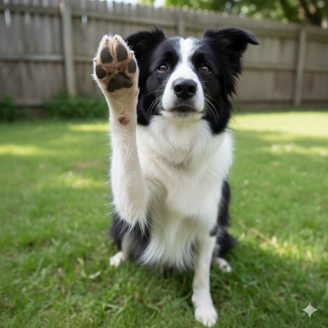
(AI generated photo)
When you work your dog on sheep — whether that’s on the farm or at herding trials — you already know how physically demanding it is. These dogs are doing tight turns, sudden stops, explosive outruns, and long work sessions, often on uneven ground. It’s real athletic work.
But there’s one area I find many handlers forget to check after a session. The toes.
It might sound like a small thing, but regularly checking your dog’s toes after working sheep can prevent a surprising number of injuries. And it only takes a minute.
Herding Dogs Are True Athletes
We all know our Border Collie’s are incredible athletes. They accelerate quickly, pivot sharply, crouch low, and push off the ground repeatedly during a single run. Now think about the terrain they often work on:
- uneven pasture
- dirt and mud
- grass that can be slippery
- hard dry ground
- or for the lucky ones, snow!
Every one of those explosive movements goes through the toes first.
To put this in perspective, imagine a competitive runner training barefoot on rocky, uneven terrain. Those small joints in the foot would take a huge amount of strain. That’s essentially what our herding dogs are doing every time they work stock. Their toes are responsible for:
- absorbing impact
- creating traction
- generating push-off power.
And they’re doing it without the support we humans get from shoes. Over time, even small stresses in those little joints can add up.
Another thing to remember, herding dogs are incredibly driven. Many will keep working even when something doesn’t feel quite right, which means small injuries can be easy to miss in the early stages.
Common Toe Injuries in Herding Dogs
Digital ligament sprains
All those fast direction changes can overstretch the ligaments that stabilize the toe joints. Early signs can be very subtle. You might notice:
- a slight hesitation when turning in one direction
- reduced drive on outruns
- a small change in stride length
- occasional paw licking after work.
Even a mild ligament strain can change how a dog loads the entire leg.
Sesamoid strain
Inside the toes are small bones called sesamoids that help with leverage during push-off. When dogs are repeatedly exploding into motion — especially on hard or slippery ground — these structures can become irritated. Handlers sometimes notice:
- weaker push-off
- reluctance on tight turns
- slightly slower acceleration.
Abrasions and foreign objects
This is the one that is a no brainer for most of us, but I will mention it anyway. I can’t tell you how often someone ends up at the vet and it turns out to be a thistle! Things like:
- foxtails
- burrs
- thistles
- sharp stones
- cracked dry ground.
These can easily lodge between the toes or cause tiny cuts. They may not look dramatic, but they can still cause inflammation, infection, or discomfort that affects movement. And again — many herding dogs will simply work through it.
Why Toe Injuries Matter More Than You Think
A toe injury rarely stays just a toe problem. If a dog has pain in one toe, they’ll naturally change how they move to avoid it. Those small adjustments can slowly overload other parts of the body. Over time I often see compensation patterns like:
- more strain on the wrist or hock
- extra loading through the elbow or knee
- shoulder or hip overuse
- tension through the back.
For dogs that compete regularly, even subtle changes like this can start to affect performance. And for dogs already at risk of iliopsoas strains or shoulder injuries, altered push-off mechanics can increase strain over time. So, protecting the toes really helps protect the entire movement system.
A Simple Post-Herding Toe Check
The good news is this is very easy to do. A proper toe check takes less than a minute per paw. After each work session:
- Let your dog settle and cool down.
- Lift the paw and gently spread the toes.
- Look between the toes for debris, cuts, or redness.
- Gently flex and extend each toe joint.
- Notice if your dog pulls away or seems sensitive.
You’re also feeling for things like heat, swelling, or thickened tissue, which can be early signs of irritation. If you notice something that doesn’t feel right, it’s usually best to reduce work for a few days and monitor it before it turns into a bigger problem. Catching things early can save you weeks of lost training.
Why This Small Habit Makes a Big Difference
Herding dogs rely on extremely precise movement. Even a small loss of stability in the toes can affect:
- balance
- timing
- push-off power
- confidence working stock.
Making toe checks part of your routine helps:
- maintain efficient movement
- reduce secondary injuries
- support long-term joint health
- protect performance longevity.
Most handlers are very tuned in to how their dog works sheep. Adding a quick physical check just gives you another layer of awareness.
Final Thoughts
Herding dogs are incredible partners. Their drive and athleticism are what make them so special. But that same determination also means they’ll often hide small injuries until they become bigger ones. Taking one minute after each session to check your dog’s toes is a simple habit that can make a real difference. Because when you protect the toes, you’re also protecting the knees, shoulders, hips, spine — and the long-term soundness of your dog. And that’s something every working dog deserves.