
by Alicia Lund
(Photo credit Tierney Graham)
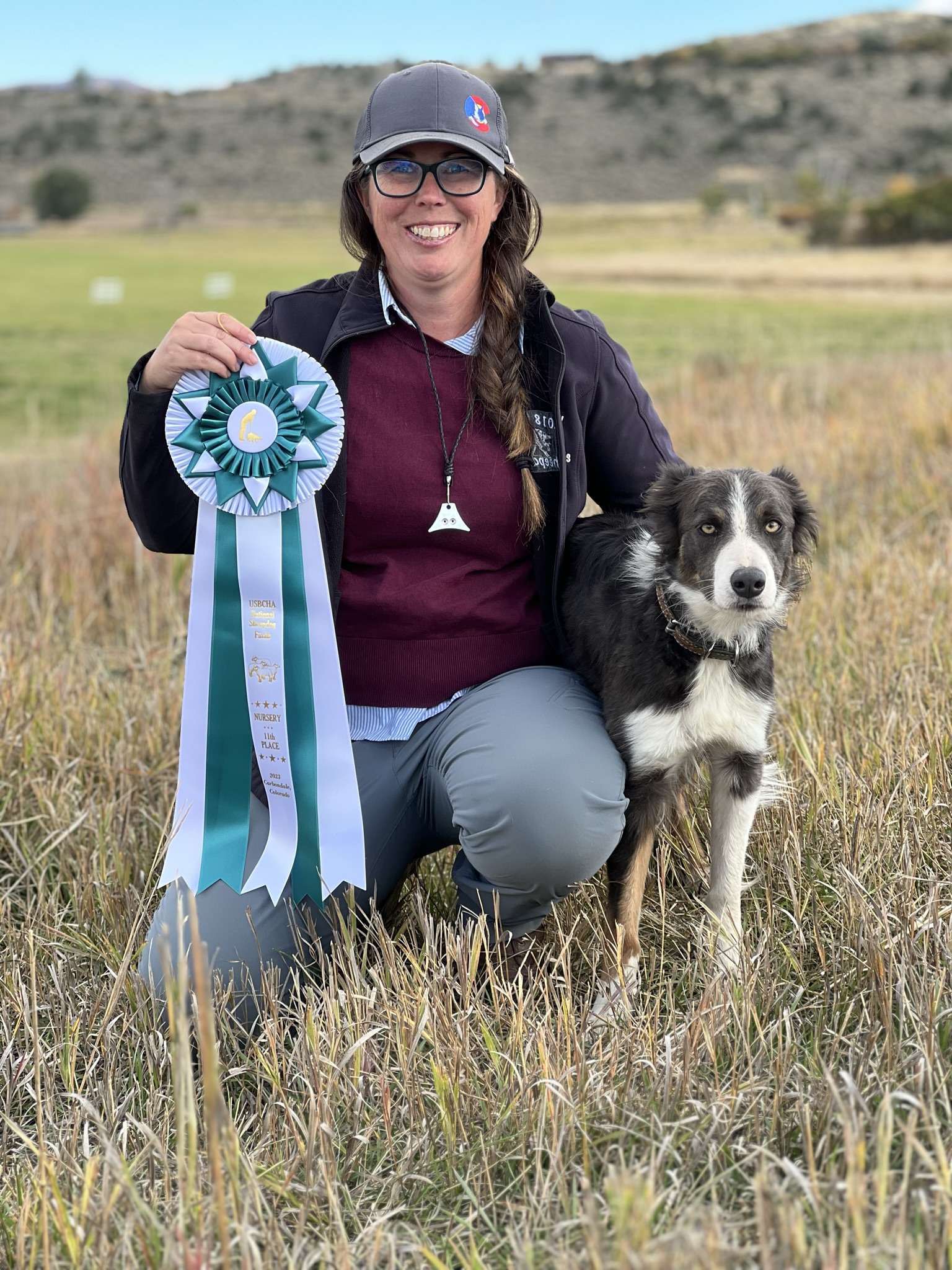
Alicia Lund lives in Tennessee and lists an impressive array of trialing accomplishments to date:
Multiple Open Trial Wins
2022 & 2023 USBCHA National Finals Double Lift Finalist
2023 & 2024 USBCHA Nursery Finalist
2023 USA World Team Member
Kingston Double Lift Finalist
Ranch Master Classic Double Lift Winner
North Carolina State Championship Double Lift Finalist
When I am starting a young dog, I introduce the concept of driving early. I have found that the longer you work on balance exercises with a dog the harder it will become to introduce off balance work. As soon as my dog has a solid stop, I begin to start asking my dog to stop off balance. I want my dog to be comfortable being on the same side of the sheep as me. This stage may take longer depending on how uncomfortable the dog is being off balance; I don’t move forward until the dog is very willing to stop anywhere on their flanks around the sheep regardless of where I am standing. Once they are happy doing this, we move on to more formal driving training.
Driving is ultimately broken down into two concepts, a dog willing to push sheep away and then reliable flanks to steer. I try to break each thing down into smaller steps and to not work on all of them at the same time.
Some dogs have a very natural walk on and take to driving very easily. They have what I call “Free Forward”, they are very happy to walk directly into sheep no matter where they are on a flank. These dogs are quick to understand the concept and can move on to learning off balance and inside flanks fast because you don’t have to spend as much time teaching them it’s ok to take sheep away. For the “Flankier” types with stronger instincts to go to balance, I spend more time just teaching them to walk directly into their sheep. It is really important when you give the walk up command that the dog walks straight into their sheep and does not slide to one side of the sheep or the other. I manage this early on by either stopping the dog when it flanks instead of walking up or using a long line to help the dog maintain direct pressure on the sheep. This concept can be very stressful for certain types of dogs so it’s important to keep sessions short and only ask them to drive a short distance in the beginning and then take the pressure off with balance work or outrun work.
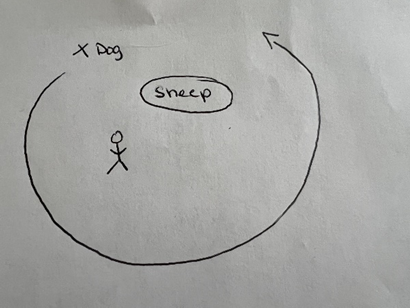
To teach off balance flanks I prefer to stand off set from the sheep on one side or the other of the dog. I will stop the dog short of the balance point and then ask them to flank back around behind me instead of letting them go the short distance to balance. The closer the dog is to balance, the harder it will be to get them to let go and listen to the words you are saying. It is a nice way to make sure they are listening to what you are saying and not just doing what their instincts tell them. It helps get better obedience early. I have added a diagram of this exercise below to help visualize.
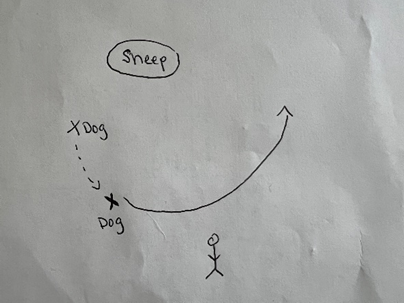
Once the dog is confident in the above exercises, it’s natural to start inside flanks because the dog is confident taking sheep away from you and understands off balance flanks. Because of the way I teach off balance flanks the dogs will often target going around behind me even when I am standing much further back which helps set up a nice clean inside flank. When I flank them off balance and they try to go back around behind me, I stop them and step further back and ask for the flank again. Usually after a few attempts the dog starts to understand they don’t need to go behind me any longer and cross in front of me.
I spend a lot of time teaching my young dogs to drive, I think it can be the trickiest thing to get right. There are a lot of moving parts but once all the above concepts are solid then everything else is very easy. I move past balance exercises very fast, I use balance to teach a stop but once they are stopping we move on to driving.